
David Bader |
Research Areas: Data science, high performance computing, cybersecurity, computational science and engineering Cyber-Infrastructure for Community Detection, Extraction and Search in Large Networks Networks, or graphs, consist of nodes (vertices) connected by edges (links) and are used to represent various types of information such as social relationships or biological interactions. Community detection, also called graph clustering, is a key problem that involves grouping vertices into cohesive clusters based on their connections. This project focuses on developing new, efficient methods for community detection that can handle very large networks with millions or billions of nodes. The research will address limitations in current approaches, like poorly connected clusters and introduce the Connectivity Modifier software, which improves cluster quality. The project aims to create a modular suite of clustering tools, optimized for high-performance computing platforms. Additionally, it includes educational initiatives, providing advanced training for undergraduate and graduate students. The outcomes are expected to benefit diverse fields such as biology, engineering and social sciences by enabling analysis of massive networks. |
|

Vincent Oria |
Research Areas: Multimedia databases, spatio-temporal databases, recommender systems Dimensionality and Scalability Issues in High-Dimensional Spaces When researching fundamental operations in areas such as search and retrieval, data mining, machine learning, multimedia, recommendation systems and bioinformatics, the efficiency and effectiveness of implementations depends crucially on the interplay between measures of data similarity and the features by which data objects are represented. When the number of features—known as data dimensionality—is high, the discriminative ability of similarity measures diminishes to the point where methods that depend on them lose their effectiveness. Our research looks at the interplay between local features, the intrinsic dimensionality and their application to search, indexing and machine learning. Multi-Instrument Database of Solar Flares Solar flares are the most prominent manifestation of the sun’s magnetic activity. They emit radiation that could potentially damage power systems, interfere with civilian and military radio frequencies and disrupt spacecraft operations. To improve analysis, in collaboration with the department of physics, we aim to integrate, clean and enrich solar data captured by various solar flare observing instruments around the world and are using them for some predictive analysis tasks. |

Senjuti Basu Roy |
Research Areas: Human-in-the-loop large-scale data analytics, optimization algorithms Big Data Analytics Laboratory - Data Analytics with Humans-in-the-Loop The Big Data Analytics Lab (BDaL) is an interdisciplinary research laboratory that focuses on large-scale data analytics problems rising in different application domains and disciplines. One focus of our lab is to investigate an alternative computational paradigm that involves humans-in-the-loop for big data. These problems arise at different stages in a traditional data science pipeline, such as data cleaning, query answering, ad-hoc data exploration or predictive modeling, as well as from emerging applications. We study optimization opportunities that arise because of this unique man-machine collaboration and address data management and computational challenges. Our focus application domains are crowdsourcing, social networks, health care, climate science, retail and business, naval applications and spatial data. |
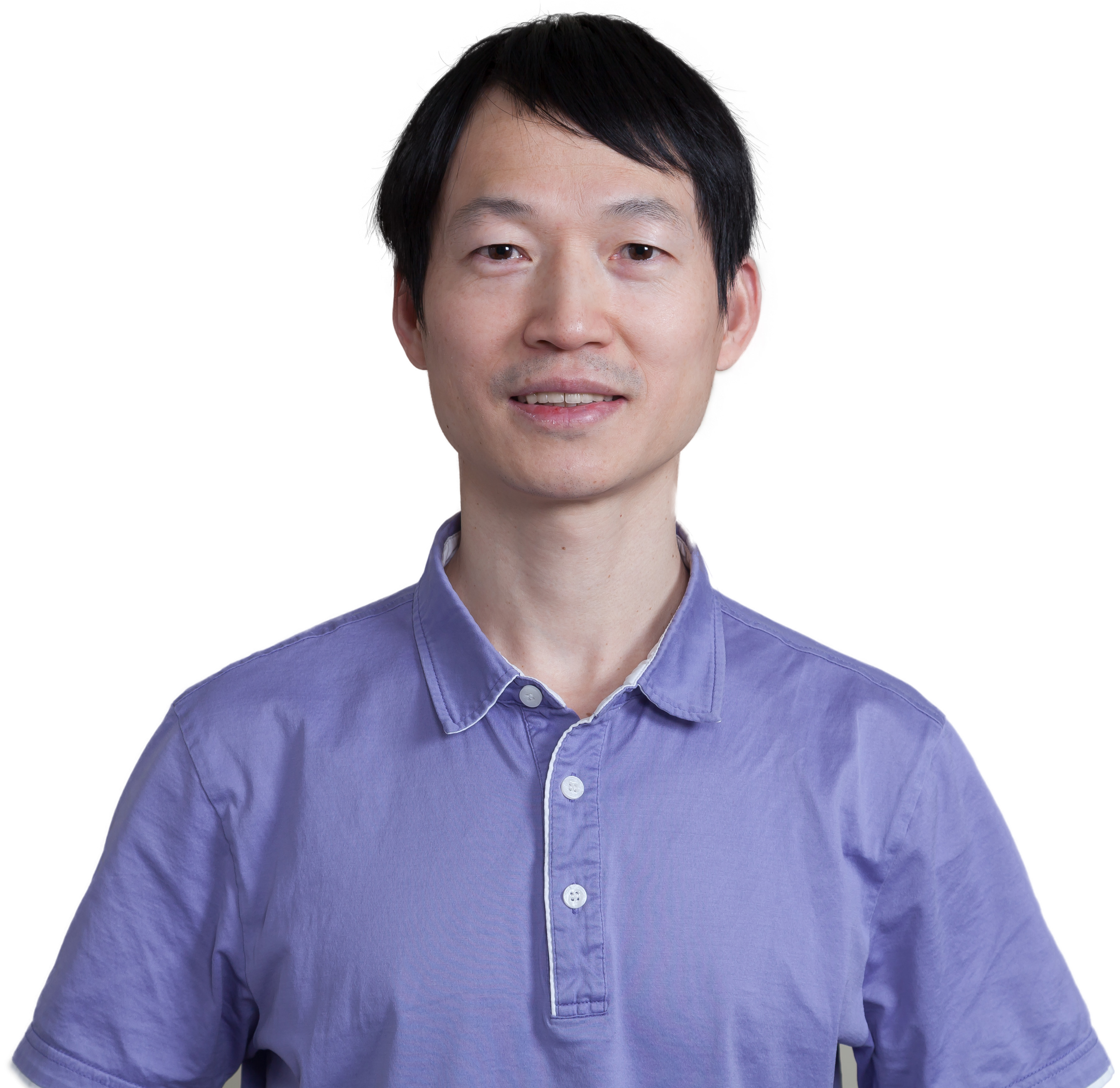
Chase Wu |
Research Areas: Big data, machine learning, green computing and networking, parallel and distributed computing Revolutionizing Big Data Scientific Computations Next-generation scientific applications are transitioning to large-scale simulations. We develop visualization algorithms for 3D volume data generated by scientific computations on supercomputers and apply machine learning techniques to automate, expedite and optimize the parameter tuning process in model development. Modeling and Optimizing Big Data Ecosystems We develop a cross-layer coupled design framework, which integrates information theory-based feature selection and stochastic approximation-based profiling to automate and optimize the configuration of big data ecosystems. Optimizing Distributed Training and Inference of Deep Neural Networks (DNNs) We represent parallelized DNNs as workflows and develop new approaches to workflow partitioning, mapping and scheduling alongside memory-saving techniques to optimize training and inference in multi-node GPU/CPU systems. Reducing Energy Consumption in Big Data Computation Using power-down and speed-scaling models, we reduce operational costs and CO2 emissions in high-performance networks for big data transfer. Uncovering Low-Level, Hazardous Radiation We develop tools using large-scale sensor data to detect and contain radioactive materials, helping protect against public health and safety threats. |
Popular Searches
Main Menu

- Home
- About
- Programs
-
Research
-
Research Report 2025
- Advanced Algorithms
- AI + X
- Big Data
- Bioinformatics and Medical Informatics
- Blockchain Technologies
- Cloud/Edge/High-Performance Computing
- Computing Education Research
- Computer Graphics
- Cybersecurity
- Data Mining
- Extended Reality
- Human Computer Interaction
- Image and Video
- Large Language Models
- Machine Learning, Deep Learning and Reinforcement Learning
- Mobile Computing
- Privacy
- Software Engineering and Programming Languages
-
2023 Research Report
- Table of Contents
- Advanced Algorithms
- Applied AI
- Big Data
- Bioinformatics
- Blockchain Technologies
- Cloud/Edge/High-Performance Computing
- Computer Graphics
- Computing Education Research
- Cybersecurity
- Data Mining
- Extended Reality
- Human Computer Interaction
- Image and Video
- Machine, Deep and Reinforcement Learning
- Medical Informatics
- Mobile Computing
- Software Engineering and Programming Languages
- Student Research Opportunities
- Co-Op Experience
- Capstone Program
- Institute for Data Science
- Institute for Future Technologies
-
Research Report 2025
- Current Students
- News & Events
- Contact Us